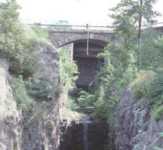

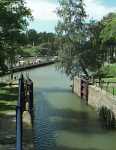

Polhems line
from the 18th century
The line from 1800.
The line from 1844.
Here the place
were both
1800 and 1844 starts.
At this time cou could not sail all the way from lake Vänern to the sea. But transport on water were easier, faster and cheaper than transport on land. At that time there were no roads, ecept paths for animals and for riding.
And from Vänern via Göta Älv partically everything all the Swedish trade with foreign countries hade to pass here. The mouth of Göta Älv was Swedens only open port to western world. Very early a road was established from Vassbotten by Vänersborg to Lilla Edet, from where the ships could sail to the sea.. When the first lock at Lilla Edet was vuilt 1607 the ships could sail up til Åkerström just south of Trollhättan and the traffic on Edsvägen from Vassbotten to Åkerström increased.
This road was improved continiously and was used by all kinds of horse-drawn cartloads. Traffic sholud have been something like todays overcrowded motorways! According to information from 1749 states that 900 horses were permanently moving along the road.each with one cart full of cargo. One horseman could hanlde up to 12 or 15 horses. The distance between Vassbotten and Åkerström is 12 kilometer, so the distance between the horses were only seven meters if all horses were on route at the same time.
The people who owned, managed and worked with the transports here faced a difficult rival if a canal all the way from lake Vänern all the way to the sea was built.
Many people consider that the dissaster that stopped Christoffer Polhem's canal i Trollhättan in 1755 actually was a sabotage. But no investigations were done and there are no Proof.
|
|
|
|
Polhems line
| The line from 1800.
| The line from 1844.
| Here the place
|
 Click here to get back to the Trollhätte canal page.
This page was modified at