
The Viking canal, Isle of Skye
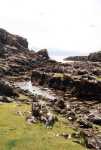
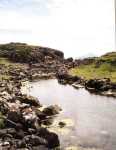
Canal from Loch na h-Airde to the Sea. There is water in the canal at Mean Low Water Springs, but scarcely at Mean High Water Springs.
It is obvious that this canal is made by man. Rocks have been removed from the channel and these have been piled up as a rough wall on the west side.
| 
| 
| 
|
The canal at low water
| The canal at high water
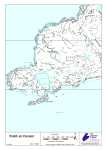
| Map showing Rubha' an Dunain and the canal between Loch na h-Airde and the sea
| A closer map of the canal and Loch na h-Airde
|
© Copyright Photos: HIGHLAND COUNCIL SITES AND MONUMENTS RECORD. © Copyright Maps: CROWN COPYRIGHT. ALL RIGHTS RESERVED 10002369 2006'
History in short:
Locally the canal is called The Viking Canal. But so far archeologists examining the canal has not been able to determine when the canal was built. During the 11th and 12th centuries many people in Scotland, on the many isles and on Ireland were of Norse stock, Vikings that had settled in the area. At Rubh' an Dunain on Isle of Skye a man called Asgall settled at about 1170. Isle of Skye was part of a Viking kingdom governed from Dunvegan. Asgall and his sons became Lieutenants of the Coast, guarding against frequent raids from other Viking clans.
The family name was transformed to MacAskill, and the canal here is mentioned in their family chronicle as built by the Vikings.
In the 19th century there was a fishing community nearby.
Read about the Viking canal at Lindesnes in Norway.
And about the Viking canal at Samsö in Denmark.
Sources: The archeological department of The Highland Council and www.macaskill.com
Do send comments or further information to Bosse Arnholm!
 Click here to get back to the startpage.
This page was modified at


